BioMax Environmental Inc.
727 19th Street
Pacific Grove, CA 93950
(831) 264-3414

Blog
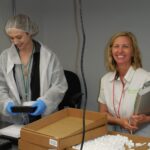
Cannabis Manufacturing Ergonomic Evaluation and Training
Implementing ergonomic programs in the workplace can reduce repetitive stress related injuries and pain as well as improve productivity, morale, and even attendance. BioMax Environmental’s ergonomists are skilled at performing these evaluations and have become experts in the specific needs associated with the emerging cannabis industry and its unique requirements, conditions, and demands on workers and the workplace environments. Our specialists and industrial hygienists are particularly skilled to recognize, evaluate, and control workplace hazards and conditions that contribute to musculoskeletal injury and repetitive … Continue reading
read more

Wildfire Smoke Damage Assessments
The recent devastating wildfires have impacted many communities in both Northern and Southern California. As of this date, the fires have burned tens of thousands of acres and have destroyed thousands of homes and structures, killing many in it’s path of destruction. Due to the changing wind patterns and the varying topography of the affected areas, the resultant smoke from these uncontrolled wildfires has also traveled throughout adjacent communities and regions affecting workplaces as well as residences within a large geographic area lying … Continue reading
read more
Growing Pains in the Cannabis Industry
With the recent legalization of Cannabis products, there has also been a resultant increase in regulatory oversight and management within this emerging industry as it relates to the areas of cannabis cultivation, product manufacturing, and distribution. In California (as well as in much of the Unites States and Canada), this legalization has also resulted in significant cannabis “growing pains” due to the lack of standardized codes, requirements, and enforcement with respect to these industries. In fact, depending on location and relevant local ordinances, … Continue reading
read more

Napa and Sonoma Fire and Smoke Damage Contamination and How BioMax is Helping…
BioMax Environmental Inc. is actively participating in the assessment, testing, and categorizing of debris, as well as related smoke damaged household possessions that were destroyed and/or affected by the Napa and Sonoma County wildfires. BioMax’s Certified Industrial Hygienists and Industrial Hygiene Technicians are actively participating in these activities to aid homeowners and businesses who have been affected by these recent wildfires. Certain protocols must be followed following a wildfire disaster when removing structural ash and debris left by the fire. To be in … Continue reading
read more

Lethal doses of Heroin, Fentanyl, and Carfentanil
Comparing the relative size of a lethal dose of Heroin, Fentanyl, and Carfentanil… image from the NH State Police Forensic Laboratory. As industrial hygiene specialists, BioMax has recently performed sampling assessments of residences following drug busts and has developed effective procedures to successfully decontaminate and mitigate properties contaminated with synthetic opioid residues. Fentanyl is a synthetic opioid-based pain killer that is now being widely illegally used by those addicted to opioid pain killers and added to other illicit drugs such as cocaine, methamphetamine, … Continue reading
read more

Environmental Evaluations for Real Estate and Property Management
BioMax offers assessments and evaluations of potential environmental hazards in homes, buildings, and/or on properties. Evaluating potential environmental hazards can be very beneficial to property managers, real estate agents, home owners, and potential buyers. An environmental evaluation may increase property value and offer “peace-of-mind” to all parties relative to environmental liabilities and concerns. The most common environmental hazards which BioMax is asked to routinely assess in both older and newer structures include Asbestos, Lead, Microbial (Mold), and Drug Residue. BioMax also provides assessment services to … Continue reading
read more

Fentanyl: The Newest and Deadliest Drug on the Street…
Fentanyl is a synthetic opioid which is 25 to 40 times more potent than heroin and 50 to 100 times more potent than morphine. When prescribed by a physician, fentanyl is often administered via injection, transdermal patch, or in lozenges as a treatment for pain. However, illegal non-pharmaceutical fentanyl is sold as a powder, spiked on blotter paper, mixed with or substituted for heroin, or as tablets that mimic other less potent opioids. Drug abuse can occur by users who will swallow, snort, … Continue reading
read more

How is Methamphetamine Residue Contamination Created?
As part of our Certified Industrial Hygiene (CIH) services, BioMax is frequently asked to develop site-specific cleanup procedures and methods to decontaminate methamphetamine (meth) contamination from surfaces. In fact, as BioMax’s Senior CIH, I have personally performed many hundreds of meth residue assessments since 1996 which have included single-family residences, rental properties, commercial properties, hotels/motels, houseboats, automobiles, and even bare/vacant land. Most of these assessments were performed as a result of a State regulatory mandate (following a meth lab bust) but also sometimes … Continue reading
read more

How Long Does Meth Contamination Last on Surfaces ???
As BioMax Environmental’s Senior Certified Industrial Hygienist, I have frequently been asked… “How long does Methamphetamine residue contamination last on surfaces and do these concentrations change (do they degrade/lessen) over time?” This is a very important question when it comes to the cleanup of sites years after discovery and/or if the owners find out that their site or (residence) was contaminated by previous occupants. In answering that question, I had the fortunate opportunity to participate manage a project where a methamphetamine lab was discovered … Continue reading
read more
Why Use a Certified Industrial Hygienist (CIH)?
Talking with a client recently regarding a microbial (mold) assessment of her residence, I was asked a very good question… “Why should I hire a Certified Industrial Hygienist (CIH) perform the assessment and what level of expertise do I get for having a CIH versus a non-CIH certified professional do the work?” OK… “Fair enough I state!!!” Let me answer that question “frankly”…The simplest answer is that contracting with a Certified Industrial Hygienist establishes the highest level of professional expertise and verified technical background employed for her project and … Continue reading
read more